
Ipswich City Council has more than 6,500 hectares of reserves and conservation estates in the Ipswich area to ensure that significant natural resources are sustainably managed and secured for the future
These conservation areas are managed through Enviroplan, with much of the land also purchased through Enviroplan since its launch in 1996.
Acknowledgement of Country
Ipswich City Council respectfully acknowledges the Traditional Owners as custodians of the land and waters with which we share.
We pay our respects to elders past, present and emerging, as the Keepers of traditions, customs, cultures and stories of proud peoples.
Purga Nature Reserve
840 Middle Road, Purga
Purga Nature Reserve allows visitors to view the largest protected area of endangered Swamp Tea-tree forest (Melaleuca irbyana) in the world.
Within this 140 hectare reserve catch a glimpse of wallabies grazing and orchids hidden amongst the weeping foliage of Swamp Tea-tree.
The reserve features raised boardwalks for an easy self-guided walk that provides visitors with an exceptional opportunity to explore vegetation and wildlife less than 15km from Ipswich CBD.
Amenities include toilets, picnic settings, parking.
Flinders – Goolman Conservation Estate
Mount Flinders Road, Peak Crossing
Located 20 minutes drive from the Ipswich City, the Flinders-Goolman Conservation Estate covers over 2,200 hectares. The conservation estate supports extensive forests and rugged volcanic peaks and slopes including Flinders Peak, Mt Blaine, Mt Catherine and Mt Goolman.
This estate forms part of the largest remaining tract of lowland eucalypt forest in South East Queensland, stretching from Flinders Peak to Karawatha Forest in Brisbane, providing critical habitat for a number of key species, including the vulnerable Brush-tailed Rock Wallaby, Ipswich’s faunal emblem.
A range of recreational activities are on offer to visitors to the Flinders-Goolman Conservation Estate including bird-watching, hiking, mountain bike and horse riding and camping. Amenities include barbecues, toilets, picnic settings and parking.
The campground at Harding’s Paddock provides the only bush camping opportunity within the 6,000+ hectares of natural reserves in the Ipswich region.
- Parks Search Hardings Paddock
- Parks Search Flinders Plum
- Flinders-Goolman Trails Guide (PDF, 8.3 MB)
- Walking and hiking
- Brush-tailed Rock Wallaby Recovery Plan
(PDF, 5.2 MB)
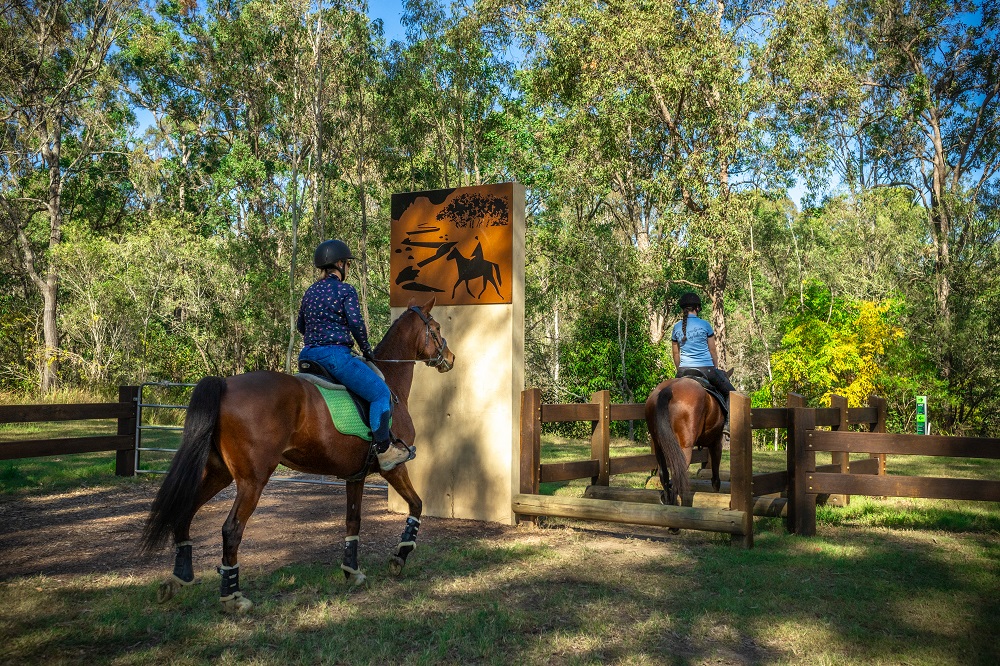
Hillview Drive Reserve
124-170 Riverside Drive, Muirlea
Only 4.7kms north of the Ipswich CBD in the suburb of Muirlea you’ll find the Hillview Drive Reserve. This 37 hectare reserve adjoining the popular Kholo Enviroplan Reserve along the Brisbane River helps to conserve native vegetation.
The reserve was purchased through Enviroplan in 1999 to form part of a major bioregional corridor which connects across the Brisbane River with linkages to Brisbane Forest Park.
The reserve also has a shared use recreational trail for bushwalking and mountain biking. Amenities include picnic benches.
Kholo Enviroplan Reserve (Cameron's Scrub)
Riverside Drive, Pine Mountain
In the suburb of Pine Mountain, next to the Brisbane River, is 158 hectares originally known as Cameron’s Scrub, but recently renamed Kholo Enviroplan Reserve.
The area supports a wide variety of bird, mammal, reptile and amphibian species and adjoins a nature refuge to the west that is owned and managed by the State Government.
Together, the reserve and the refuge protect a dry vine forest vegetation complex that has almost completely disappeared from South-East Queensland.
Some of the key species in the area include Spectacled Monarch, Rose-crowned Fruit Dove, Noisy Pitta, Lloyd's Native Olice and Platypus.
Due to no current public access or onsite facilities, access to this estate is via a council approved permit for selected activities only.
White Rock - Spring Mountain Conservation Estate
White Rock Drive, Redbank Plains
Located just 20 minutes from the IpswichCBD and 35 minutes from Brisbane CBD, this 2500 hectare estate features the iconic outcrops of White Rock and Spring Mountain. The estate also forms an important core habitat area within the Flinders Karawatha Corridor and holds some of the highest natural and conservation values in the region.
A great diversity of live exists within its distinctive sculptured, rocky outcrops, extensive forested ridges, escarpments and valleys. More than 600 plant species and 150 faunal species have been identified, including five threated floral and three faunal species. It also supports three endangered vegetation types and functions as the headwaters of seven major waterways.
This Conservation Estate remains sacred to the Traditional Owners of Ipswich. Some of the Cultural Landscapes within this estate include White Rock, the caves and outcrop overhangs. These sacred sites are very important to the Traditional Owners as they provide a link between Country and personal identity and allow the passing on of cultural knowledge. As per Cultural Protocol the Traditional Owners have requested no one climbs White Rock.
Visitors can enjoy the full range of outdoor activities, including hiking, bird-watching, horse riding, mountain bike riding and nature study. The main entry to the estate is the Paperbark Flats picnic area at the end of School Road in Redbank Plains. Amenities on site include toilets, picnic facilities and horse float parking.
- White Rock - Spring Mountain Trails Guide (PDF, 4.4 MB)
- Parks Search White Rock - Spring Mountain Conservation Estate
- White Rock - Spring Mountain Master Plan (PDF, 6.6 MB)
- Experience Nature guided bushwalks
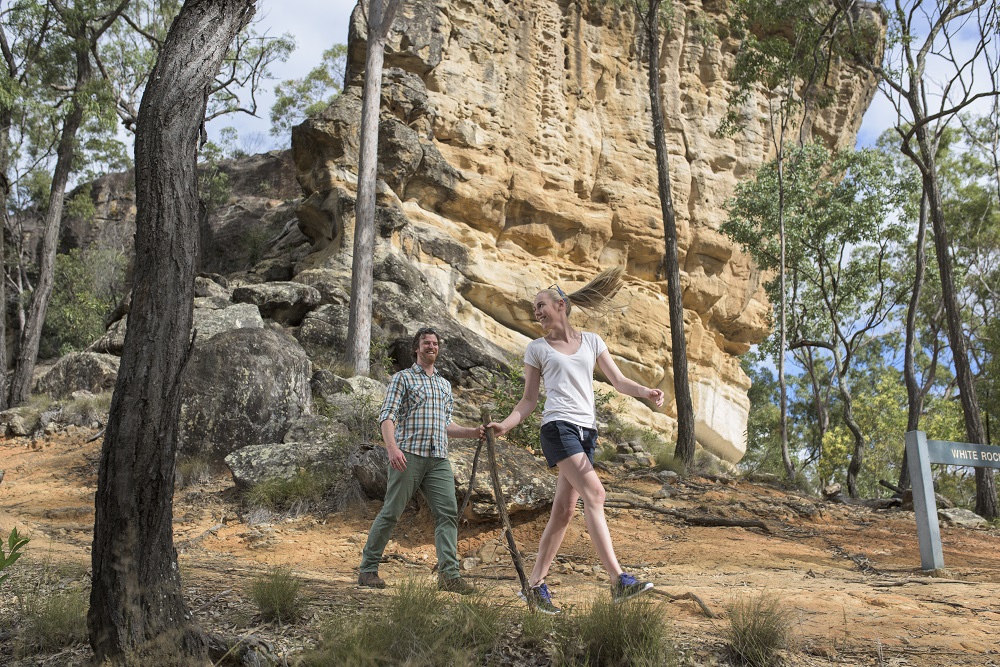
Haig Street Quarry Reserve
High Street, Brassall
Haig Street Quarry Conservation Reserve is a hidden gem in the suburbs, only 4 kilometres from Ipswich Central. The 20 hectare reserve is a rehabilitated dry eucalypt forest and great place for bird watching, especially the Quarry Pond.
The reserve assists to maintain a north south corridor that allows for wildlife movement from the Pine Mountain area through to the Bremer River.
Amenities include picnic shelters and barbecues, a lookout, playground, toilets and parking.
Denmark Hill Conservation Park
20 Chelmsford Avenue, Ipswich
With more than 11 hectares of natural environment to explore, Denmark Hill Conservation Reserve provides a natural wonderland in the heart of Ipswich. Amenities include picnic shelters, barbecues, toilets and nature-inspired play area.
It's a popular place for bird watchers, with owls, kookaburras, wrens, finches and others making their homes there.
Like many other Ipswich attractions, Denmark Hill has a prolific history. It sits above closed-off mine tunnels with part of the walking trails following the former coal-skip tramway.
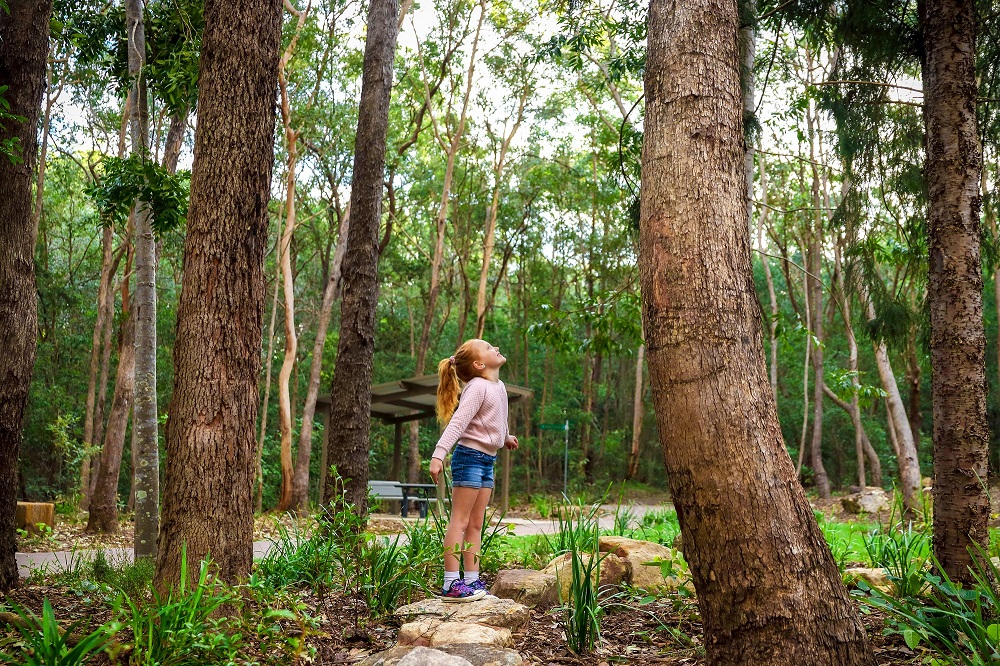
Woodend Nature Centre
35 Williams Street, Coalfalls
Ipswich Pteropus Conservation Park, also known as Woodend Nature Centre, is less than 10 minutes from the Ipswich CBD.
The park is home to one of the largest flying fox colonies in South-East Queensland with roosts along a gully in Woodend as part of the reserve. The species that inhabit the reserve are fairly transient, constantly leaving the region to find refuge and food in other areas.
The Ipswich Pteropus Conservation Park was formally established in 1994 with the facility including car parking, disabled access, sheltered areas and toilets (keys required). There is a large viewing deck, which allows excellent viewing of the flying foxes colony. Prime viewing time is fly out, which is late afternoon to dusk.
Mount Grandchester Conservation Estate
The small country town of Grandchester in Ipswich's west features a 977 hectare conservation area. Mount Grandchester is part of the Little Liverpool Range, providing essential habitat connectivity to the Main Ranges National Park and the Great Eastern Ranges.
Typically an area with a strong history of cattle grazing and logging, Mount Grandchester was purchased through Enviroplan with the intent of preserving its strong biodiversity values through conservation efforts and significant revegetation projects.
Species such as the Grass Tree, Glossy Black-cockatoo, Phascogale and Slender Milkvine have been identified within the estate.
Due to no current public access or onsite facilities, access to this estate is via a council approved permit for selected activities only.
Ric Nattrass Environmental Park
Corner Bertha Street and Eric Street, Goodna
This 13.7 hectare park about 15km east of Ipswich Central adjoins degraded sections of Woogaroo Creek. It has a circuit trail suitable for most ages and fitness levels.
The park provides protection for native vegetation and the significant ecological values of the area. It also provides connectivity for species from White Rock - Spring Mountain Conservation Estate to the Brisbane River corridor.
In 2006 the park was named Ric Nattrass Environmental Park in honor of Ric's advocacy work and recognition of his valuable contribution to conservation and the environment.
Stirling Road Reserve
West of Walloon, near Perrys Knob, is 33 hectares of land providing extremely valuable habitat. Stirling Road Reserve was purchased under Enviroplan to protect areas of regenerating dry vine forest that includes the rare Bailey's Cypress and the vulnerable Black-breasted Button Quail.
Prior to European settlement, there was a large scrub extending from present-day Rosewood to Fernvale, known as the Rosewood Scrub. Stirling Road Reserve is an important remnant of this once-extensive scrub.
Due to no current public access or onsite facilities, access to this estate is via a council approved permit for selected activities only.
Mount Beau Brummell Conservation Park
Mount Beau Brummell is one of the highest points on the Little Liverpool Range, on the border of Ipswich and the Lockyer Valley local government areas.
A diversity of vegetation types are found covering the slopes and cliff faces of the 157 hectare conservation park.A stunning feature of the reserve is the abundance of Giant Spear Lilies, which has rosettes that can take up to 13 years to flower.
Mount Beau Brummell displays iconic montane eucalypt forest and heath, which provides natural habitat for fauna such as the Wedge-tailed Eagle, Brush-tailed Rock Wallaby, Whiptail Wallaby and Pale-headed Rosella.
Due to no current public access or onsite facilities, access to this estate is via a council approved permit for selected activities only.